2026-07-20 · Mark Thibodeaux
Drying a Flooded Home in Bridge City: The Professional Process
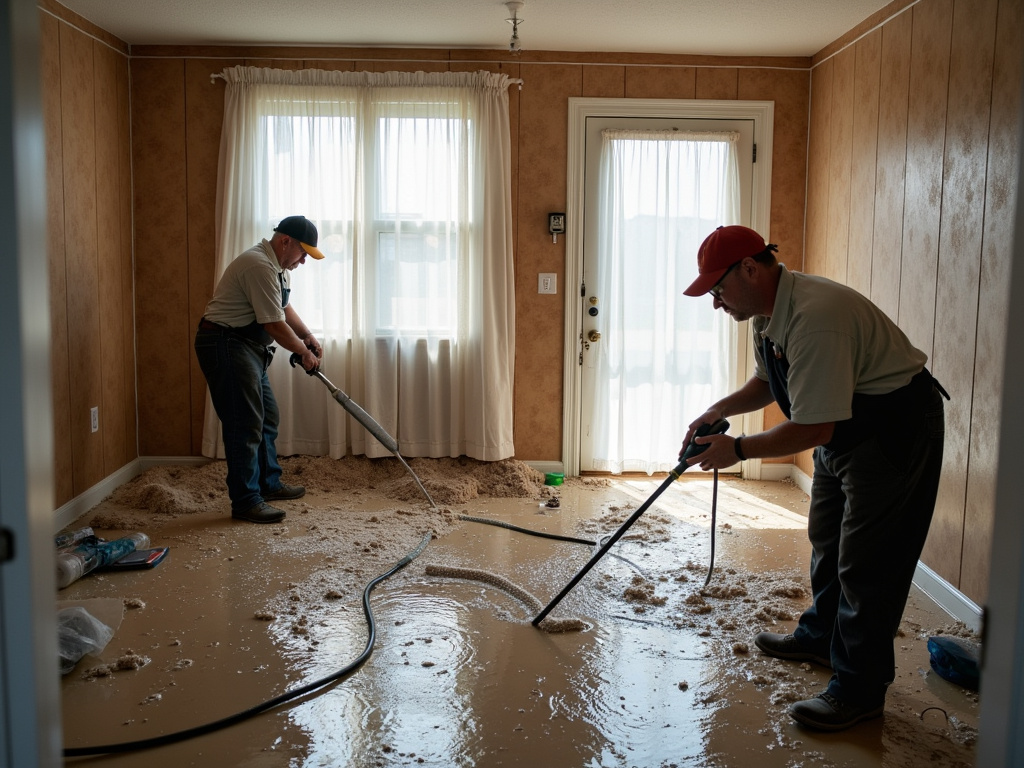
The professional drying process for a flooded Bridge City home starts with immediate water extraction using truck-mounted pumps and portable extractors, followed by industrial air movers and dehumidifiers that typically bring moisture levels to safe readings within 5–10 days on slab foundations after storms like Harvey or Laura.
Initial Water Removal and Safety Steps
After any flood tied to Sabine Lake surge or overflow from the Neches and Sabine rivers, the first action is removing standing water before it migrates into slab edges or wall cavities. RiverFlow Bridge City crews arrive with submersible pumps rated for several hundred gallons per minute and begin at the lowest points near Texas Avenue. Safety checks come next because floodwater often carries sewage from overwhelmed lift stations along Cow Bayou. Technicians don PPE and isolate electrical panels before placing extraction equipment. Homeowners along Roundbunch Road frequently see water sitting for days after Veterans Memorial Bridge area rainfall, so prompt removal prevents deeper saturation of particleboard cabinets and base plates. Once bulk water is gone, the team photographs and documents every affected room to support insurance claims common in the Golden Triangle.
Moisture Mapping on Slab Foundations
Bridge City slab homes trap moisture differently than pier-and-beam structures because concrete acts as a thermal mass that holds humidity against flooring. Technicians use penetrating and non-penetrating meters plus infrared cameras to create a moisture map that identifies hidden pockets near the Rainbow Bridge approach roads where storm surge pushes water under door thresholds. This step reveals whether drywall needs removal up to 12–18 inches or if only baseboards must come off. In homes hit by Hurricane Ike, crews found moisture readings above 20 percent still present weeks later in slab-adjacent insulation, leading to hidden mold. Accurate mapping guides equipment placement so air movers direct airflow across the slab rather than just through living space, shortening overall drying time.
Dehumidification and Equipment Monitoring
Once extraction finishes, the focus shifts to structural drying with commercial dehumidifiers sized for Southeast Texas humidity. Units rated at 70–150 pints per day run continuously while technicians log temperature and relative humidity every 24 hours. In Bridge City’s year-round climate, outdoor dew points often exceed 75 degrees, so equipment must overcome constant moisture re-entry through vents and electrical boxes. Daily checks catch when filter changes are needed or when additional air movers should be added near interior walls. Homeowners who skip this monitoring stage after Laura frequently call back because readings plateau above 60 percent, allowing mold to start on subflooring. The process continues until every reading drops below 1 percent above outdoor ambient on both concrete and wood surfaces.
Final Verification and Next Steps
Drying ends only after independent verification with calibrated meters and, when needed, air sampling. RiverFlow Bridge City provides written reports showing pre- and post-drying moisture levels so homeowners know the structure is truly dry before new flooring goes down. If any section still shows elevated readings, targeted emergency water removal & dehumidification continues rather than declaring the job complete. For properties that also experienced sewage intrusion, the team may recommend following up with storm & flood damage restoration protocols. Residents comparing experiences after Harvey often note that homes dried by pros avoided the secondary mold issues that appeared in structures left to air-dry alone. Call RiverFlow Bridge City to schedule an on-site assessment before the next Gulf system moves inland.